
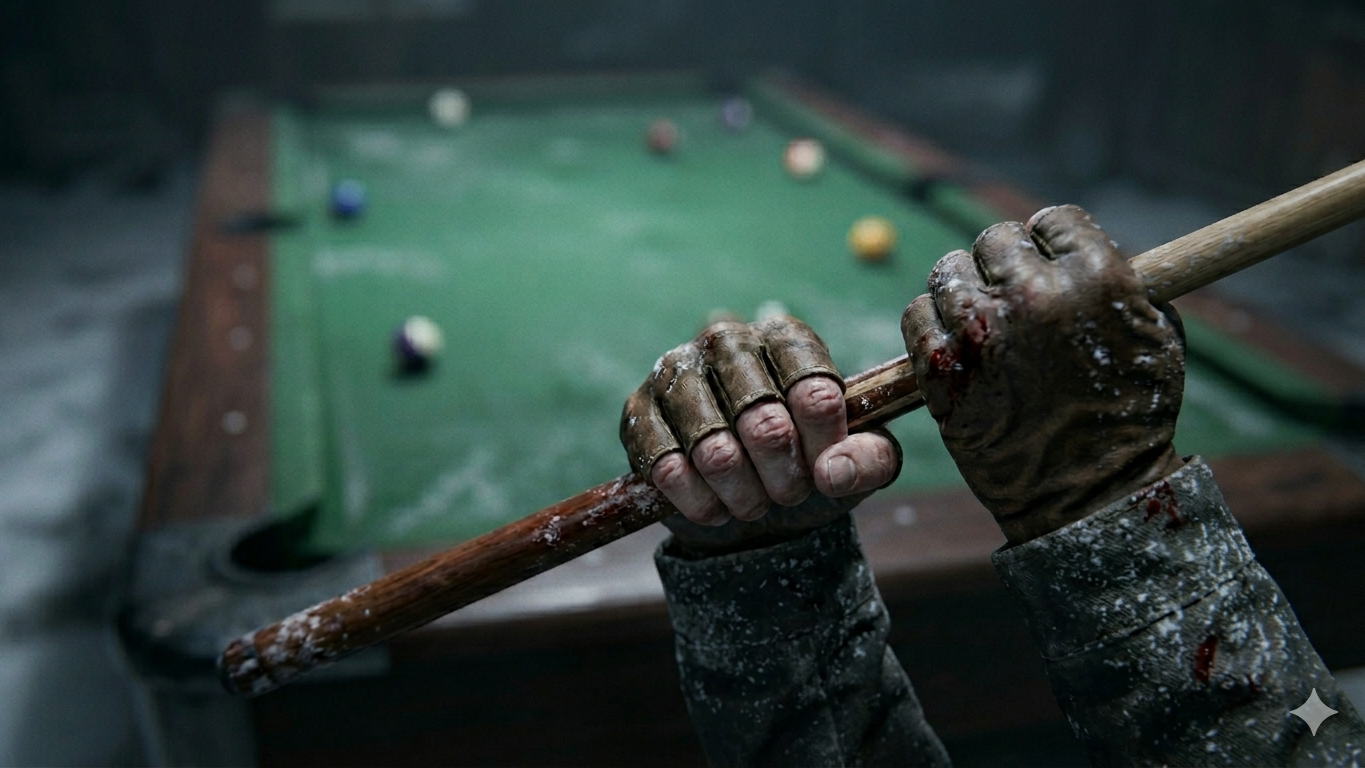
How to Hold a Pool Cue (Without Looking Like a Beginner)
You've seen That Person at the pool hall. Don't be That Person.
You know the person. They walk up to the table, grab the cue like it's a broomstick and jab at the ball like they're trying to start a fight with it. The cue ball limps sideways. Everyone pretends not to notice.
Don't be that person.
The good news is that holding a pool cue properly is one of those things that takes about two minutes to learn but instantly makes you look like you've been playing for years. It's the single biggest upgrade a beginner can make – and nobody teaches it because experienced players forgot they ever had to learn it.
Your Back Hand (the One Doing the Work)
Your back hand – that's your dominant hand – grips the butt end of the cue. Not at the very end (you're not jousting) and not in the middle (you're not holding a tray). Somewhere around 10–15 cm from the end.
The grip should be loose. Like, way looser than you think. Imagine holding a small bird – firm enough that it doesn't fly away, gentle enough that you don't crush it. If your knuckles are white, you're strangling the cue and your shots will show it.
Your Front Hand (the Bridge)
This is where most beginners look awkward. Your front hand sits on the table and forms a "bridge" – a guide that the cue slides through. There are a few ways to do this, but the easiest is the open bridge.
Place your hand flat on the table. Spread your fingers wide for stability. Now push your knuckles up slightly so there's a groove between your thumb and index finger. The cue rests in that groove. That's it. You now have a bridge that looks intentional rather than panicked.
If you want to level up, try the closed bridge: wrap your index finger over the cue so it forms a loop. This gives more control and – crucially – looks significantly more impressive to anyone watching. Which, let's be honest, is half the point.
The Stance (Yes, It Matters)
Your feet should be roughly shoulder-width apart, with your front foot pointing toward the shot. Lean in comfortably. If you look like you're about to fall over, you're too far forward. If you're standing bolt upright, you're too far back.
The cue should be as level as possible – parallel to the table. Beginners tend to lift the back end up like they're playing mini golf. Keep it flat. A level cue means a straighter shot, and a straighter shot means fewer embarrassing moments.
The Stroke
Swing from the elbow, not the shoulder. Your upper arm stays still – it's a pendulum, not a catapult. A few smooth practice strokes before you hit the ball will make you look like you know what you're doing. Even if you don't.
And follow through. Don't stab at the ball and pull back like you've touched something hot. Let the cue keep moving forward after contact. It's smoother, more accurate, and it looks about ten times more confident.
The Shortcut to Looking Good
Here's the secret: nobody at a casual pool night is judging your potting accuracy. They're judging your vibe. A relaxed grip, a decent bridge, a smooth stroke and a level cue – that's 90% of looking like a player. The other 10% is not celebrating too hard when you accidentally pot something.
Next time you're at a pool hall, spend your first two minutes just getting comfortable with the cue. Feel the weight. Practice the bridge. Slide it back and forth a few times. You'll be amazed at how quickly it clicks – and how different it feels from that broomstick-jabbing approach.
Now go impress someone.